
AI is removing the bottom rung. Who backs this generation?
May 27, 2026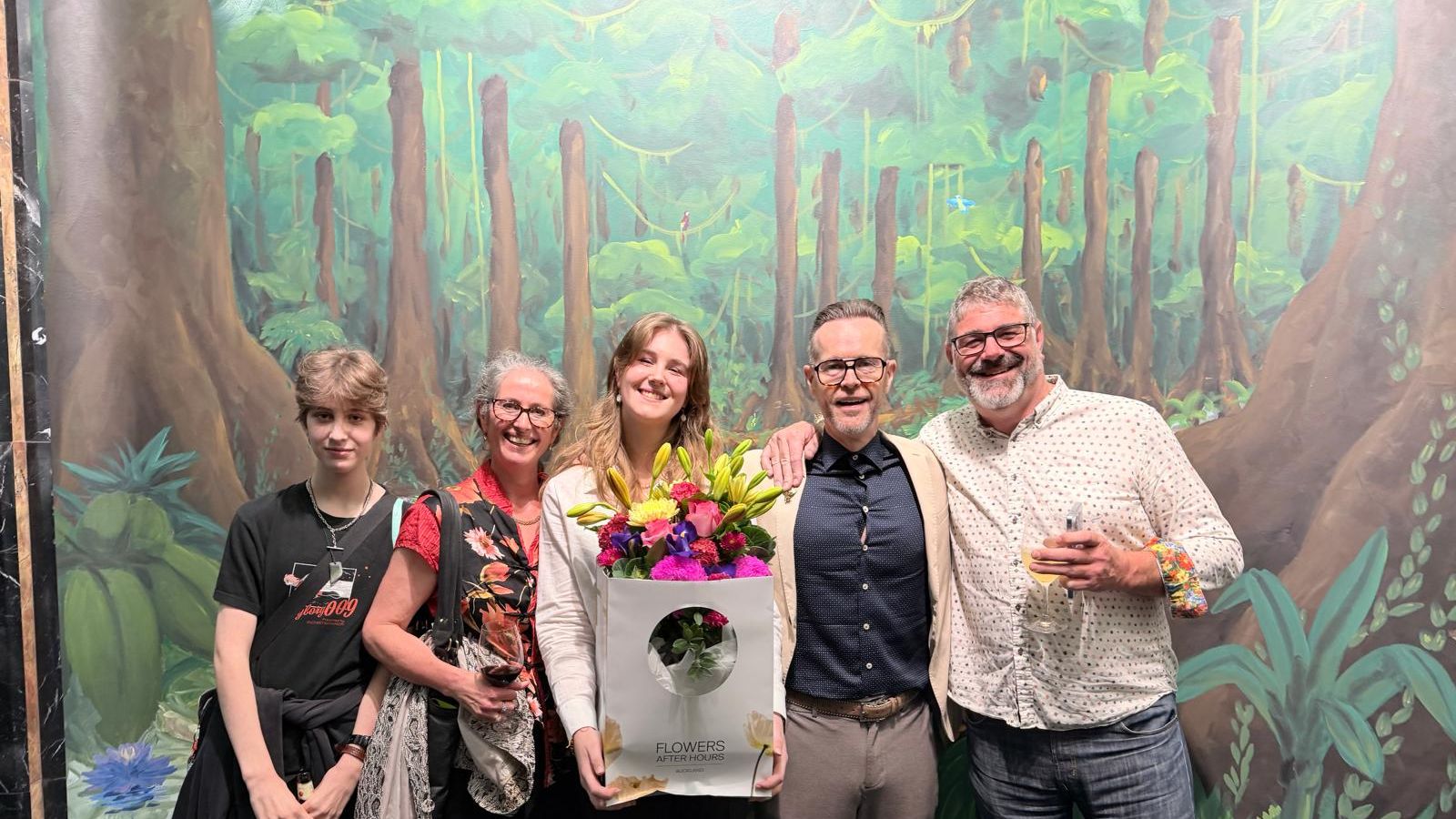
My niece painted this mural, and (of course) it got me thinking about the Medici.
A few weeks ago we unveiled her first commercial commission, a mural in the foyer of a building in Auckland. I'm one of the owners (full disclosure, and as Body Corporate Chair I drove the commission for her), so I'm not exactly a neutral observer here. She's a fine art student, this is her first real piece in a public space, and she stood there doing that polite, slightly awkward thing young artists do when people praise the work that came out of their own hands.
I gave a short speech. The bit I kept referring to is the Medici.
The Renaissance didn't happen because the world liked art. It happened because a small number of wealthy families chose to commission young talent before it had a track record. Without the Medici, no Botticelli. Without Botticelli, no Renaissance. They paid working artists by name, gave them messy unstructured work, and trusted them with things they hadn't yet proven they could do. The art got made because the people with capital decided to spend some of it on creativity rather than just on themselves. You could argue both of these things is true….
Looking at my niece's mural with her standing right there, I started thinking about who's doing this now, and not just for art. For the whole generation coming up behind us; AI is quietly removing the bottom rung of the ladder at the exact moment this generation is trying to step onto it.
The numbers are genuinely alarming. In New Zealand, youth unemployment for the 15-24 cohort hit 15.2% late last year, roughly triple the rate for the rest of the workforce! Globally the numbers look the same, and have increased by 30% in 2 years. Underneath it, something more interesting is happening - for the first time in modern history, recent college graduates have a higher unemployment rate than the overall workforce. In other words, the degree may be becoming useless.
The bit that matters is where this is trending. We're not removing work evenly across the workforce, we're removing the bottom rung - the junior analyst, the junior copywriter, the junior developer, the customer support role - the entry-level work that used to teach people how to work. The work AI does first and cheapest is exactly the work that used to be the on-ramp.
And when you actually talk to people in their early twenties about it (I have, including my niece), it isn't just career anxiety, it's a deeper kind of uncertainty. Their fear isn't "I won't get the job I want", it's "there may not be a place for me at all". Looking at the data, that fear isn't irrational.
If your young team is resisting using AI - this is why!
Which brings me back to the Medici, and to the people in positions like mine (perhaps - ours?). They weren't being saintly when they backed young artists. They understood something obvious that we seem to have forgotten - that a society which doesn't back its young talent ends up with a thinner culture, a smaller economy, and fewer future builders.
Backing them isn't charity, it's a fairly straightforward investment in the conditions that make your own success possible. Today, it has never been easier to do the opposite. The AI is faster, the offshore contractor is cheaper, the senior person on payroll can absorb the work. Each call makes sense in isolation. The aggregate is a generation that never gets a first shot - no first job, no first commission, no first reference.
So here's the ask for anyone reading this with the capital, the team, or the influence to make these calls. Take the bet. Hire the junior when the AI could do the task, commission the young artist when you could buy something safer, give people the messy unstructured work where they actually learn something, pay them properly, back them before they're proven. Think about being a custodian, not just an extractor.
The mural will sit on that wall for 2 years. Every time my niece walks past it she'll know somebody backed her early, trusted her with something real, treated her work as worth paying for. The Medici worked it out 600 years ago. We can probably manage it now.
Cheers,
Josh
2 Commas Journal